
Top 20 Child Development Activities at Home for Fun Learning
Looking for effective child development activities at home? This article presents 20 engaging and educational ideas that foster your child’s growth and learning. You’ll find practical activities ranging from rotating toys to interactive storytime, all designed to support their development and build your child’s vocabulary in a fun way. Keep reading to discover simple yet impactful ways to enrich your child’s home environment.
Key Takeaways
-
Rotating toys can keep kids engaged and encourage creativity without overwhelming them with too many options.
-
Interactive storytime with different voices and post-reading discussions significantly boosts language skills, empathy, and critical thinking.
-
Sensory play, including homemade playdough and sensory bins, enhances motor skills, language development, and creativity through tactile exploration.
Rotating Toys for Engagement

Switching up the toys accessible to children on a regular basis is an ingenious and effective way to keep their interest in play high. By introducing different sets of toys at intervals, kids are provided with novel ideas for play without being overwhelmed by too many choices all at once. This strategy sustains their concentration and encourages them to engage in solo play. Imagine creating a small-scale toy library where only a select number of items are showcased at any given time. This approach reignites excitement every time there’s an introduction of what seems like a “new” toy.
Open-ended items such as puzzles and building blocks make excellent candidates for rotational play since they stimulate imagination and foster critical thinking skills while playing. Larger stationary toys, for instance, dollhouses or kitchen sets, can stay put. Yet switching out their smaller components can inject fresh enthusiasm into the child’s routine. Not only does rotating toys capture continual attention from kids, but it also plays a crucial role in extending their focus duration and nurturing competencies that allow them self-entertainment.
Interactive Storytime
Engaging in interactive storytime with your child goes beyond simply reading aloud. By adopting various voices and facial expressions, you enable your child to learn to grasp different emotions and forge a stronger bond with the characters in the stories. This method not only captivates their attention, but also expands their child’s vocabulary and hones communication skills.
The dialogue that unfolds after an immersive story session is equally crucial. When you prompt children with questions about the narrative and how the characters feel, it encourages them to engage in critical thinking and articulate their thoughts clearly. Such interactions bolster memory retention as well as develop language using abilities, transforming reading into an active learning experience. Books that herald spring or showcase characters overcoming obstacles can be especially impactful for teaching empathy along with strategic thinking.
Revisiting beloved picture books multiple times can provide children with repeated exposure to unfamiliar words and sentence patterns they need to learn. Consistent storytelling moments foster a passion for literature by associating book time with warmth and joy—a foundation setting up a lifetime of avid reading enjoyment for your youngster! Begin this enthralling journey today by picking out a book filled with adventure for your baby or both of you to discover together!
Sensory Play Ideas
Sensory play is particularly beneficial for a young child as it engages their senses and promotes development.
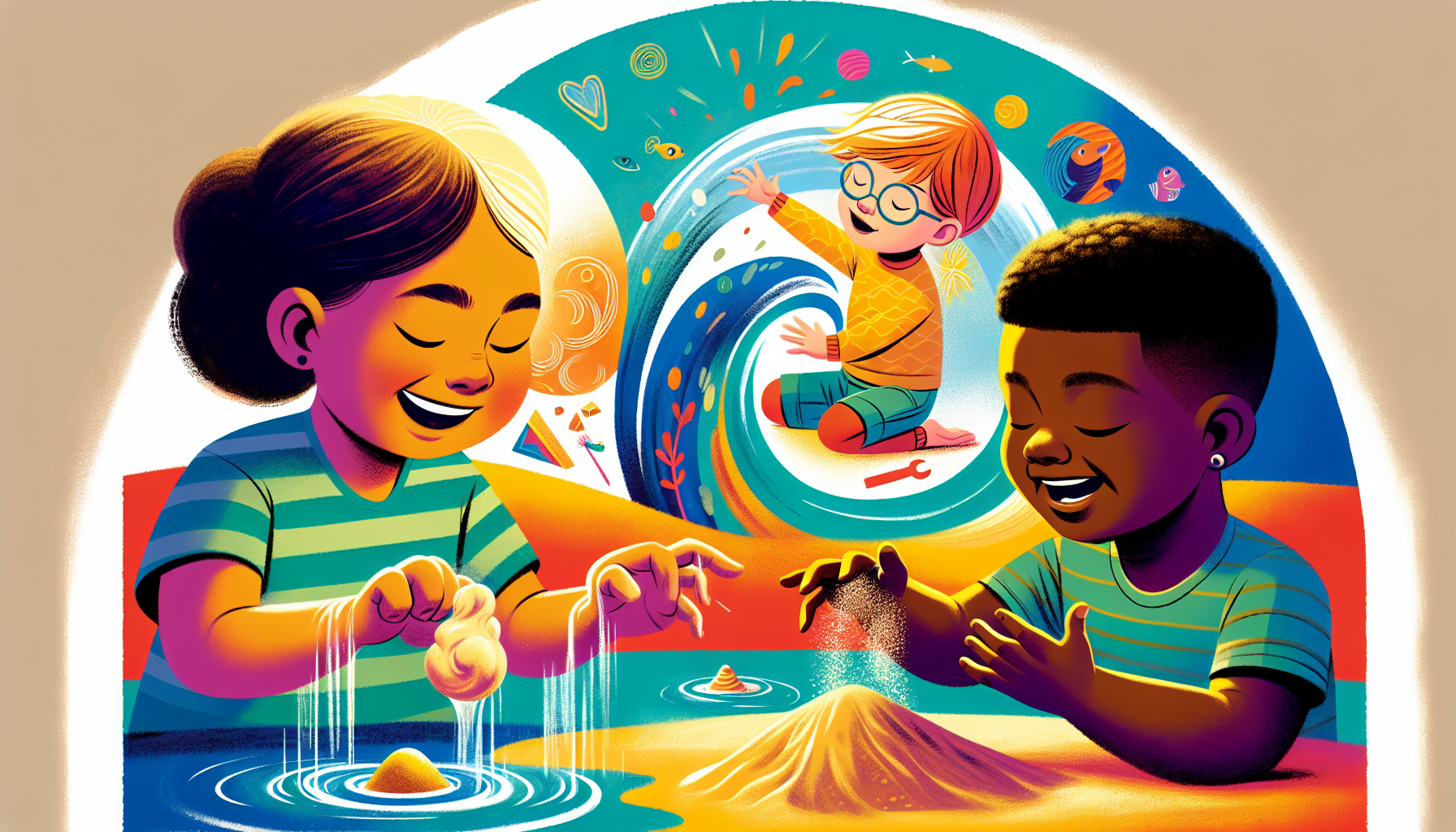
Stimulating the development of children and engaging their senses can be wonderfully accomplished through playful sensory activities. Engaging with elements such as touch, smell, taste, sight, and hearing not only offers an immersive learning environment, but also boosts motor abilities and language acquisition. For example, when kids play with DIY play dough, they’re strengthening their fingers while working on hand-eye coordination and unleashing their creative side.
Building sensory bins using diverse fillers like colored rice, pasta or chickpeas promotes discovery and lays a foundation for understanding science concepts through investigation. Such bins present various textures that invite children to exercise their imagination while partaking in unrestricted play scenarios. Creating sensory bottles filled with glittery substances or other simple items can provide soothing effects that assist in managing anxiety.
For those seeking even more stimulating experiences for youngsters’ senses. Water-based games or crafting oobleck—a curious substance made from cornstarch mixed with water—offer memorable tactile sensations while educating about material properties along with cause-and-effect dynamics.
The world of sensory exploration is laden with opportunities for both entertainment and educational growth!
Crafting with Everyday Items to Develop Fine Motor Skills
To nurture creativity and impart eco-friendly habits, crafting with everyday items is an excellent approach. Recycled materials like egg cartons and toilet paper rolls can be transformed into a myriad of fun and educational projects. For instance, egg cartons can be used to create caterpillars that promote fine motor skills, while toilet paper rolls can become binoculars or animal figures, sparking imaginative play.
Old magazines, paper plates, and cardboard boxes are also excellent materials for crafting. Here are some ideas for cardboard box and what you can do with them:
-
Collages made from magazine cutouts enhance fine motor skills and creativity
-
Paper plates can be turned into masks or other imaginative creations
-
Cardboard boxes are perfect for building miniature houses or castles, encouraging problem-solving and imaginative play.
So next time you’re about to throw away an everyday item, think about how it can be repurposed into a fun craft project!
Role Play and Dress-Up

Role play and dress-up activities extend well beyond mere amusement. They are pivotal in nurturing communication skills and emotional intelligence. By assuming diverse roles and personas, kids learn to negotiate, share, exchange ideas effectively, and develop compassion as they delve into the experiences of various characters.
Partaking in role play is instrumental for children’s cognitive growth. Through these playful acts, kids can:
-
Conjure up extraordinary worlds that not only spur on creative thinking but also help them comprehend their real environment.
-
Set up imaginative settings like a miniature office or a pretend marketplace which bolsters their ability to communicate while acquainting them with societal roles.
-
Participate in organized make-believe exercises such as staging theatrical performances or embarking on torch-lit quests that assist youngsters in articulating feelings and developing emotional awareness.
By dressing up as different figures from stories or daily life scenarios, not only improves interaction among peers, but it also enhances confidence and promotes healthy self-perception. Engaging with dolls or imitating beloved superheroes gives children a secure avenue for emotions exploration through expression. Therefore, provide an assortment of costumes allowing those youthful imaginations to soar!
Building a Reading Nook
Transforming reading time into a cherished daily ritual can be accomplished by creating a cozy reading nook. Here are some tips to help you create the perfect reading nook:
-
Create a distraction-free environment
-
Use comfortable seating like floor cushions or a kids’ rocking chair
-
Add a little lamp or flashlight to make the nook practical and inviting, even in dimly lit areas
By following these tips, you can enhance focus and enjoyment during storytime.
To make the reading corner even more appealing, you can:
-
Include favorite stuffed animals and cozy blankets
-
Use sling shelves to display a child’s favorite books, making them easily accessible and encouraging frequent reading
-
Add personal touches like reading-themed wall art or framed prints of favorite quotes to enhance the nook’s aesthetic and make it a special place for your child.
Music and Movement Games
Engaging children in the development of their motor skills, language abilities, and literacy can be a delightful experience by incorporating music and motion activities. Activities such as singing songs and performing dance moves enable kids to grasp concepts like rhythm, sequencing numbers, and improving coordination. Entertaining games such as musical statues or the Hokey Pokey not only provide amusement, but also foster better listening capabilities, spatial perception, and equilibrium.
Introducing an imaginative element like pretending to be different animals through dance movements is a captivating way for little ones to enhance their sense of timing, dexterity in movement control, and creative flair. Call-and-response melodies are yet another valuable avenue for augmenting auditory sharpness, rhythmic proficiency, and recall abilities while maintaining engagement with fun interactions.
Delving into the expressive qualities of music helps children link tunes with feelings. This encourages empathy alongside abstract thought processes. Crafting makeshift drums along with using diverse musical tools instills a deep-seated appreciation for musical elements while refining beat awareness auditorial focus. Furthermore, a celebration featuring dances set to international sounds serves dual purposes: offering enjoyment imparting cultural knowledge accompanied by exposure to diverse genres rooted in distinct traditions worldwide.
Outdoor Exploration
Encouraging kids to explore the outdoors is a powerful tool for fostering their physical strength, emotional health, and care for nature. The great benefits of such exploration include diminishing stress and anxiety levels, amplifying creativity and joy, improving focus and cognitive capabilities, as well as nurturing self-sufficiency and environmental stewardship in youngsters.
Taking part in nature hikes presents an excellent opportunity to reap these positive outcomes.
Outdoor play can be made even more fruitful with activities like treasure hunts or cloud-watching discussions. Through treasure hunts, children enhance problem-solving abilities and language development by identifying items they find. In observing clouds and articulating the various formations seen in the sky during cloud chats. Communication skills are cultivated while sparking imaginative thoughts. These simple yet captivating pursuits offer a delightful way for little ones—and adults—to bond with our natural surroundings while enjoying each other’s company.
Engage regularly in outdoor pastimes fun activities that involve:
-
Racing
-
Leaping
-
Swinging back-and-forth
These types of exercises are pivotal for reinforcing major muscle movements (gross motor skills) alongside muscular endurance—a fundamental aspect not just physically but also essential for healthy child maturation emotionally speaking too. So grab your loved ones by the hand—we’re talking both kiddos AND grown-ups—pull on those trusty active shoes tightly knotted up right now. Head outside this very moment into welcoming open-air spaces where delight is guaranteed!
Cooking Together
Engaging your whole family in cooking activities offers an excellent opportunity to spend quality time with your child and teach them valuable lessons. When preschoolers participate in the kitchen by doing things like mixing ingredients, ripping up greens, or using shaped cutters for dough, they not only practice counting and measuring—enhancing their basic math abilities—but also stimulate sensory exploration and improve social skills through this diverse educational exercise.
Getting kids involved with preparing meals can help alleviate the challenge of dealing with choosy eaters by making them more open to sampling new dishes and sparking a lasting fascination with food preparation. It’s important to always supervise these culinary adventures closely for safety reasons. When done correctly under adult watch and guidance, cooking transforms into an interactive activity loaded with fun and learning potential that benefits every member of the family. So don those aprons—the adventure begins when you join forces in the joy of creating tasty treats together!
Creating a Home Art Studio

Establishing a home art studio is crucial for enabling children to unleash their creativity. By dedicating a neat space on either the table or floor specifically for artistic endeavors, kids are more likely to engage in spontaneous and independent creative activities. The thoughtful arrangement of art materials, by putting like items together, facilitates easy access and encourages the use of imagination.
Showcasing the artwork that children produce at home can have an immense positive impact on their self-esteem and pride in their creative efforts. Engaging them in tasks such as finger painting or crafting illustrations with watercolors helps improve their fine motor skills while educating them about color theory and how different hues blend.
Promotion of artistic pursuits within the confines of one’s abode serves as a powerful stimulant for both creativity and personal expression. It offers an essential channel through which your child’s imaginative faculties can flourish.
Language Development Games
Enhancing communication abilities and broadening a child’s vocabulary can be seamlessly accomplished with a fun game and language development activities. Take the Guess-What Game, for example. It invites children to identify pictures related to spring by answering yes-or-no queries. This not only broadens their lexicon, but also encourages forward-thinking.
Discussing events from the past is equally beneficial in fostering language skills. Prompting kids to talk about their day or reminisce about a holiday empowers them with opportunities to employ new words and form complex sentences. The house cleanup game promotes vocabulary growth as children engage in an activity that requires them to understand and follow through on several steps at once.
The act of play serves as a critical pillar supporting various facets of childhood development including social interaction, exploratory learning, and emotional maturity. By weaving language-oriented games children play into your daily agenda, you’re laying down strong groundwork for your child’s communication capabilities alongside literacy enhancements—all while ensuring they have fun during playtime.
Indoor Obstacle Course for Gross Motor Skills
Encouraging kids to engage in physical activities and sharpen their problem-solving skills can be wonderfully achieved by designing indoor obstacle courses. Ensuring children’s safety while they have a blast tackling obstacles is possible with the use of items such as cushions, yoga mats, and blankets for padding purposes. Pathways can be delineated using tools like painter’s tape, directing kids through the twists and turns of the course.
Getting children involved in setting up the obstacle course not only heightens their creative involvement but also promotes a feeling of pride in what they’ve constructed. To ramp up excitement levels, consider incorporating elements like timers or imaginative scenarios—think embarking on ninja quests or superhero escapades—to capture their interest and prolong engagement time.
Indoor obstacle courses prove to be an excellent strategy for keeping young ones physically active and thoroughly amused when outdoor play isn’t feasible due to inclement weather conditions.
Family Game Night
Establishing a tradition of family game night is an engaging method to promote essential abilities, including sharing, cooperation, and the art of taking turns within the whole family. Opt for timeless favorites like ‘Chutes and Ladders’ or ‘Candy Land’, which are perfectly suited for young kids as they learn rule adherence and turn-taking. Integrating entertaining games such as ‘Go Fish’ or ‘Uno’ can enhance number recognition along with memory and counting skills in children ages three.
Games centered around the alphabet like ‘Alphabet Bingo’ offer a playful means by which families and youngsters can reinforce early literacy skills through phonics and letter identification exercises. These gatherings do more than just build unforgettable moments with your loved ones. They cultivate an appreciation for collaborative learning in a dynamic setting that’s filled with fun.
Exploring Different Cultures
Exploring different cultures can be a fascinating and educational experience for a young child. Broadening your child’s horizons and fostering an appreciation for diversity can be accomplished fantastically by exploring different cultures together. Simple activities like teaching your child how to say ‘thank you’ in multiple languages can be an engaging introduction to different cultures. Listening to songs or nursery rhymes in different languages is another fun way to expose children to new sounds and rhythms.
Crafting activities related to world cultures, such as making traditional masks or drawing flags, helps children engage physically and creatively with cultural learning. Visiting local museums to see artifacts from other cultures or attending cultural festivals can provide hands-on experiences that deepen their understanding and appreciation of global traditions.
Reading books that showcase different houses around the world or creating a homemade passport as they learn about new cultures are creative ways many children to explore the world from home. These activities not only make cultural learning fun, but also instill a sense of curiosity and respect for the diverse world we live in.
Science Experiments at Home
Introducing children to scientific concepts while encouraging curiosity and problem-solving can be wonderfully achieved through at-home science experiments. Simple experiments like creating giant soap bubbles or making slime can captivate children’s interest and teach them about chemical interactions. These activities provide hands-on learning experiences that are both fun and educational.
The balloon and baking soda experiment, which demonstrates acid-base reactions by inflating a balloon, is another engaging activity that introduces basic chemistry concepts. Testing pH levels with red cabbage water or constructing model lungs with water bottles and balloons are additional experiments that can teach children about acids, bases, and the respiratory system.
Science experiments also foster critical thinking and observational skills. For example, the floating marker man experiment and the DIY barometer project help children understand concepts like density and air pressure. These hands-on activities make learning science fun and accessible, sparking a lifelong interest in the subject.
Building with Blocks and Puzzles

Participating in enjoyable activities such as constructing with blocks and completing puzzles serves to significantly boost children’s spatial reasoning, logical thinking abilities, and capacity for recognizing shapes. The use of blocks, puzzle pieces, and shape sorters is exceptionally effective in nurturing these essential skills. By engaging in the manipulation of these materials, children learn about key concepts including symmetry and balance, which are pivotal for developing a keen sense of space.
When children immerse themselves in block play or tackle puzzles, they enhance their cognitive faculties by sharpening both problem-solving techniques and analytical thought processes. Notable advantages gained from indulgent in these pursuits comprise:
-
An improved grasp on varying geometrical forms aiding not only shape identification but also foundational mathematics
-
The strengthening of critical developmental competencies
-
Stimulation of inventiveness alongside imaginative expression
Incorporating such entertaining exercises into regular play sessions is indeed instrumental for youth enrichment.
Emotional Check-Ins
Assisting children in developing emotional intelligence and the ability to control their feelings can be effectively accomplished by regularly engaging them in emotional self-assessments. When children take a moment to pinpoint and articulate what they’re feeling, it aids them in becoming more adept at managing those emotions. For young children, using visuals like pictures or stickers on an emotions chart can make this process both fun and easier for them to understand.
Embedding these check-ins into daily life routines—like having conversations about feelings during family meals or just before sleep—enables a child to detect their own patterns of emotion and create methods for handling stressors. Promoting the use of diaries where they record sentiments gives kids an opportunity for introspection over the course of their day. These tools not only bolster emotional growth but also enrich parent-child relationships through enhanced mutual communication.
DIY Playground Equipment
To foster a child’s physical development, creativity, and problem-solving skills, consider constructing homemade playground equipment. Follow these initial steps to set the stage.
-
Select an appropriate area for play activities such as a section of your backyard or a spot in your living room.
-
Place cushioning like soft play mats on the ground to minimize injury risk from falls and enhance comfort during playtime.
-
Embark on straightforward endeavors like crafting a swing or assembling a climbing structure in your yard—these can offer endless amusement while promoting active engagement.
Imaginative projects could involve fashioning monkey bars between trees or transforming tree stumps into adventure-inspiring stepping stones. For added thrills, fabricate your own slide using plywood coated with linoleum. This also serves as an engaging project fostering not just muscular strength and hand-eye coordination, but imaginative role-play and cognitive challenges related to planning and execution too.
Digital Learning Tools
Digital learning tools provide personalized, engaging, and interactive educational experiences that are tailored for children. These tools encompass:
-
Educational apps that incorporate playful exploration to make the process of learning both entertaining and effective.
-
Virtual Reality (VR) kits designed to offer deep, immersive educational encounters.
-
Augmented Reality (AR) kits which adapt to each child’s individual pace and style of learning.
Such technologies prove especially advantageous in supporting a young child’s development during their critical early childhood development phase. They cater to a broad range of customers. They effectively keep kids engrossed in the material.
It is vital for parents to take an active role by monitoring screen time and carefully selecting suitable digital resources. Apps geared towards nurturing cognitive growth as toddlers as well as teaching empathy can greatly enhance traditional education practices. By integrating these digital solutions with conventional ways of teaching, you ensure your child benefits from a comprehensive approach to learning.
Encouraging Independent Play
Encouraging children to engage in independent play is crucial for cultivating their creativity, problem-solving abilities, and self-sufficiency. To instill this valuable skill in babies from an early age, it’s important not to disturb infants while they are concentrating on a task. When you give kids your full attention during designated playtimes, they become more inclined toward independent play as they grow.
Several tactics can be employed to promote the autonomy of children during playtime.
-
Selecting toys that don’t have a predetermined purpose and encourage imaginative use
-
Limiting the quantity of toys at their disposal to foster deeper engagement with each one
-
Setting up a welcoming space dedicated specifically for them where their imagination can flourish without limits
-
Refraining from excessive praise so as to nurture their inherent motivation
Adopting these approaches allows for extended sessions of meaningful and rewarding independent play among youngsters.
Summary
Engaging your child at home with these 20 development activities opens up a treasure trove of fun, education, and entertainment. Activities such as toy rotation, interactive reading sessions, sensory-based playtime, and excursions into the great outdoors are all tailored to enhance various developmental abilities while ensuring enjoyment is at the forefront. By weaving these actions seamlessly into your daily life, you can turn routine interactions into valuable learning experiences that support growth.
Consider each idea an opportunity to foster a rich environment conducive to your child’s well-being. Engage in everything from tactile experiments and cultural discoveries to simple art projects – all designed to nurture a passion for knowledge and ignite curiosity about their surroundings. Embrace this chance to spark joyful discovery through playful learning within the comforts of home!
Frequently Asked Questions
How often should I rotate my child’s toys?
Every couple of weeks, consider rotating your child’s toys to maintain their interest and avoid them feeling overwhelmed.
What are some examples of sensory play activities?
Engaging in sensory play activities such as creating homemade play dough, assembling sensory bins filled with colorful rice or pasta, and playing with water or sand can greatly stimulate a child’s senses. Such activities foster exploration and bolster creativity in young minds.
How can I make interactive storytime more engaging for my child?
In an effort to captivate your child during storytime, consider adopting varied tones and facial expressions when reading aloud, engage them by posing questions regarding the plot and emotions of the characters, and select stories with themes that align with your child’s interests.
Employing these strategies can foster a dynamic and delightful shared reading session for you both.
What are the benefits of involving children in cooking activities?
Engaging kids in culinary tasks can enhance their mathematical abilities, bolster sensory play and social skills, and motivate selective eaters to experiment with different foods. It provides an excellent opportunity for bonding and imparts crucial life skills to children.
How can I encourage independent play in my child?
Foster your child’s independent play by ensuring they are not disturbed while deeply engaged in their activities, providing them with your full attention when you participate in their playtime, selecting toys that facilitate open-ended exploration, and establishing a comfortable nook dedicated to creative play.
Such measures will assist in nurturing both the imaginative skills and self-sufficiency of your child’s vocabulary.

We are one of North West London’s
independent childcare provider
Group caring for children from
the age of three months to five
years (pre-school).